KDPS Kanji Learner's Dictionaries
The Kodansha Kanji Dictionary
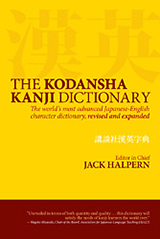
The Kodansha Kanji Dictionary — a revised, expanded edition of the groundbreaking New Japanese-English Character Dictionary — is the most complete, linguistically accurate, and up-to-date dictionary of its kind. The culmination of more than twenty years of labor-some one hundred man-years-this authoritative and easy-to-use dictionary has been celebrated the world over by students and teachers of the Japanese language for its wealth of detailed information on the meanings and usages of Sino-Japanese characters.
The Kodansha Kanji Learner's Dictionary: Revised and Expanded
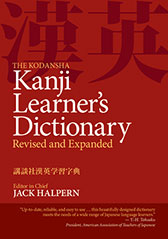
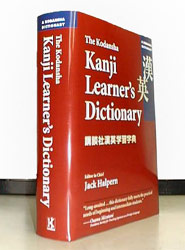
With The Kodansha Kanji Learner's Dictionary: Revised and Expanded, learners finally have at their fingertips accurate and in-depth information on all the kanji prescribed by the Japanese government. In all, 3,002 characters — 772 more than in the first edition — fill its pages, making it the most comprehensive and up-to-date dictionary of its kind and giving the learner instant access to a wealth of useful information on kanji, including their meanings, readings, stroke order, and usage in compounds.
The Kodansha Kanji Usage Guide
Kodansha USA (2015)
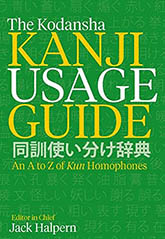
The first Japanese-English resource devoted exclusively to kun homophones, The Kodansha Kanji Usage Guide presents detailed usage articles that show the differences and similarities for 675 homophone groups, or 1590 kanji headings — the vast majority of single-character kun homophones in current use. This book is a new type of reference work that enables learners to deepen their understanding of how kun homophones are used in contemporary Japanese.
The Kodansha Kanji Learner's Dictionary: Revised and Expanded for iOS and Android

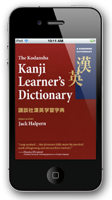
Based on the world-renowned best-selling The Kodansha Kanji Learner's Dictionary, the iOS and Android editions are beautifully designed applications that takes advantage of the smartphone and smart tablet's advanced features to make the dictionary even easier to use by learners. No kanji dictionary on the market today offers such a full range of features in such a stunning, user-friendly interface.
The Kodansha Kanji Learner's Dictionary: Electronic Dictionary Edition
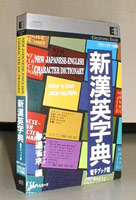
The Electronic Dictionary (ED) Edition of The Kodansha Kanji Learner's Dictionary was made available on CD-ROM and SD card in 2007 by Casio for their EX-word Dataplus series of electronic dictionaries. Learners of Japanese can now have access to KALD which takes advantage of the advanced features in electronic dictionary technology that Casio has incorporated into this line of dictionaries. Note: While this app is still on sale, we recommend purchasing the revised application liasted above, which includes over 772 characters not found in the original version. Based on the world-renowned best-selling book, The Kodansha Kanji Learner's Dictionary for iOS is an easy-to-use electronic dictionary that fully satisfies the practical needs of beginning and intermediate learners. When published, the New Japanese-English Character Dictionary was a totally new reference work designed to enable the learner to gain an in-depth understanding of how Chinese characters are used in contemporary Japanese. To aid the learner, clear, complete, and accurate character meanings, illustrated by numerous compounds and examples, are grouped around the core meaning in a logically-structured manner that allows them to be conceived as an integrated unit. To make the dictionary a tool of real precision, it also provided full guidance for distinguishing between easily confused characters (synonyms and homophones). The Kodansha Kanji Learner's Dictionary answers the urgent need for an easy-to-use kanji dictionary, compact enough to be easily carried around, yet detailed enough to satisfy the practical needs of the serious learner. Its basic goal is to give the learner a thorough understanding of how kanji are used in contemporary Japanese by providing instant access to a wealth of useful information on the meanings, readings, and compounds for the most frequently used kanji. The Electronic Book (EB) Edition of New Japanese-English Character Dictionary incorporates most of the features of its parent work, including core meanings, independent words, homophone/synonym discrimination, compounds, radicals, and a kanji thesaurus. A hierarchical menu system enables the user to easily retrieve information by specifying single or multiple keywords, such as readings, radicals, core meanings, SKIP patterns and stroke-count. This, combined with a comprehensive cross-reference network, provides the user with multiple search paths to access information with maximum speed and facility.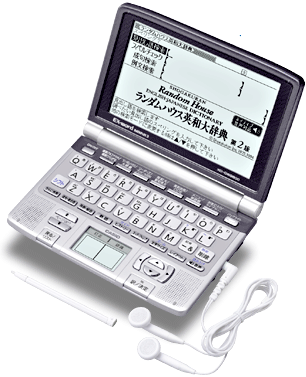
The Kodansha Kanji Learner's Dictionary for iOS
No Longer in Print
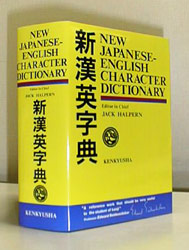
New Japanese-English Character Dictionary
The Kodansha Kanji Learner's Dictionary
New Japanese-English Character Dictionary: Electronic Book Edition