Dictionaries
Guide
Overview
NJECD
Learner's
Electronic
iOS
Order on line
Websites
KDPS
Who is KDPS
CJKI
Jack Halpern
Others
Yiddish
Languages
Humor
Unicycling
Links

KDPS Home
|
The Kodansha Kanji Learner's Dictionary
Electronic Dictionary Edition
In January 2007 Casio announced the release of the long-awaited Electronic Dictionary (ED) edition of Jack Halpern's The Kodansha Kanji Learner's Dictionary (KALD), which has enjoyed the praise of renowned scholars and learners throughout the world. Boasting the most advanced features in electronic dictionary technology, including a highly sensitive handwriting recognition search method, this dictionary went on sale in March 2007.

|
"I recommend that learners of Japanese, both of East Asian and Western origin, make full
use of this dictionary, which offers a variety of lookup methods and is a goldmine of information."
Seiju Sugito (杉戸清樹)
President,The National Language Research Institute
President, The Society for Teaching Japanese as a Foreign Language
|
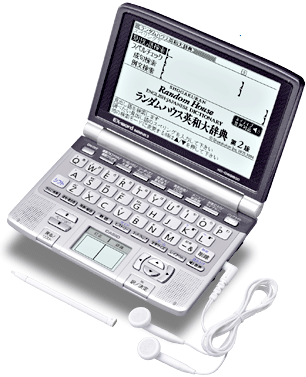 |
A major feature of electronic dictionaries in general is the speed and facility with which entries can be looked up. But the convenience of this dictionary goes well beyond that -- for the first time, the world-renowned lookup system called SKIP, which has redefined the way learners look up kanji, is now available in electronic dictionary format.
► In-depth Character Meanings
An outstanding feature of this dictionary is its in-depth treatment of meaning. Detailed meanings, arranged in a logical manner, help the learner get a quick and full understanding of the important meanings of each character.
|
Click here for more screens.
|
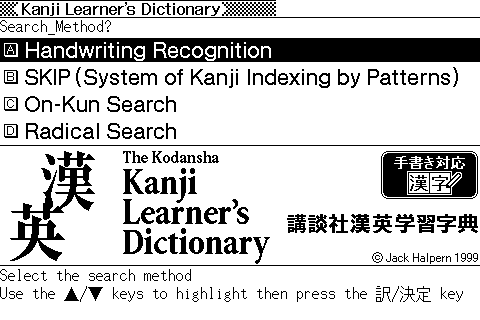
► Four search methods provide maximum speed and flexibility:
- The SKIP Search allows characters to be quickly located from their SKIP patterns and stroke counts.
- The On-Kun Search method allows characters to be looked up alphabetically from their on and kun readings.
- The Radical Search method allows characters to be looked up by their traditional radicals.
- The Handwriting Recognition Search method allows the user to input characters by drawing them manually.
|
For more details please follow the following links:
|

|
.
|
| |